Quadriplegic PC Computer Setup Gaming Workstation

Quadriplegic PC Computer Setup Gaming Workstation


Thanks to Stack-up.org & The Dept. of VA

It has taken me some time to develop a workstation that not only allows me to work from the comfort of home, while playing my favorite video games; but, also enjoy a bit of independence. The Quadriplegic PC Computer Setup Gaming Workstation Project ( and the new build) will hopefully motivate others to seek aid when needed to accomplish their computer setup goals. I also posted links to the equipment that I am putting together and currently using, down below.

pubg quadstick Quadriplegic PC Computer Setup Gaming Workstation

The Quest Begins

In Aprilish, 2017, I began communicating with organizations in hopes to upgrade my Quadriplegic PC Computer Setup Gaming Workstation.  That PC wasn’t able to provide the performance needed for the type of activities necessary: voice recognition, gaming, streaming, working, video-rendering, photo editing, etc..

First, I reached out to the Department of Veterans Affairs assistive technology department to find out if they could satiate my needs. Upon following up, was told it had been submitted to contracting, “and awaiting approval.”  So I then patiently waited for 4 to 8 weeks to confirm such approval.  Never received it.

Next, I sought to hopefully be sponsored and obtain a computer from another source. Gaming PC companies here in the United States. I also reached out to the Wounded Warrior Project out of Pittsburgh who told me of a charity called Stack Up.

Quadriplegic PC Computer Setup Gaming Workstation

https://quadcapable.com/quadriplegic-pc-computer-setup-gaming-workstation/
L: Shadow R: Cuddles

During this period, I continued to stream and do my thing with my laptop (provided by the VA) and volunteered my time to help the Stack Up organization as a game lead, along with becoming part of the Redshirt Raiders Discord. Circa October, I received a phone call from Houstongirlgotu, Orlando Stack Lead, notifying me She had a Stackup T-shirt to drop off. After several hours of small talk about everything under the sun, another knock came at the door. Two other Stack Up members Cuddles & Shadow came to my door surprisingly holding a computer.  I learned later, it was a custom built PC just for me!

Rigs 4 Vets (My Streaming Rig)

Motherboard MSI M-ATX H110M
CPU i5-7600
DDR4 2666MHz Memory- 16GB (32GB (2x16GB))
NVIDIA GeForce GTX 1070 8GB
SSD 256GB
ELGATO PROHD 60

Rigs 4 Vets is a program that I had not known about but would come to appreciate. Stack up gave me a great gaming computer that night. I have since made that PC into a stream computer after little less than two weeks later out of the blue a computer from the VA showed up (my current game PC). I believe I mentioned to Houstongirlgotu before the surprise about how many places I had gone to obtain a new computer and that they would probably, “come all at once.” Which, they kind of did.

Quadriplegic PC Computer Setup Gaming Workstation

Quadriplegic PC Computer Setup Gaming Workstation

Current Gaming PC (Dept of VA)
Motherboard ASUS X299 TUF MKII ATX
CPU i7-7740X Processor Overclocked (Overclocking (4.9 -5.2GHz)
DDR4 2666MHz Memory- 32GB (32GB (2x16GB))
MSI AERO 8GB OC GTX 1080
SSD 256GB M.2 Solid State
Optane None
CPU Cooling CORSAIR Hydro Series H100i V2 Water Cooler
Windows 10 Professional 64-Bit

The Florida Stack…

has gotten together numerous times since the upgrade. I stream regularly on my own channel, daily, twitch.tv/Quadcapable. Also through the stackupdotorg channel,  Fridays 4 pm EST, in support of their mission and to contribute what I am able. I’m currently infatuated with upgrading and bettering my system. Starting to piece together a newer rig, as a Marine, always seeking the best.

Luckily, I was able to find a new home for some of the components from Stack Up. Re-donating the remains to another veteran, x7sage7x. Had the chance to also use those same components with my daughter. Transferring them to a new case and detailing the work on PC Part Picker.

Get AFTER IT!

Just remember if you want something; never stop fighting for it. You can always find good people to help you get it done. If you have questions about any of this, please let me know so I can help you too.

My article on Stack-up.org: Rigs 4 Vets – Quadcapable gets an Upgrade!

Cant use your hands? Check this out!

What You Should Get My Recommendations

CPU Intel i7 8700K 3.7GHz 6 http://amzn.to/2nq5sRU

Motherboard Asus ROG MAXIMUS X HERO http://amzn.to/2iJQXGN

Memory G.Skill Trident Z RGB 32GB (4 x 8GB) DDR4 3200 http://amzn.to/2BFECIB

Storage Samsung M.2 pcie nvme 256 960 pro-evo http://amzn.to/2idY0E2

Video Card MSI GeForce GTX 1080 Ti 11GB GAMING X http://amzn.to/2BG1s2E

Case Thermaltake View 31 TG ATX Mid Tower Case http://amzn.to/2jIgrkv

Power Supply Corsair AXi Series, AX1200i, 1200 Watt 1200W 80+ Gold Certified Fully http://amzn.to/2icjpx5

Monitor BenQ 24 inch 144Hz eSports Gaming Monitor, 1440p, 1ms http://amzn.to/2jH6NyC

Monitor BenQ 27 inch 144Hz eSports Gaming Monitor, 1440p, 1ms http://amzn.to/2nraXzK

Other Asiahorse Wireless RGB LED 120mm X 3 Case Fans 3 pack http://amzn.to/2AmELSU

Other CustomLoop Purchased For $500.00 Misc n/a

PartPicker Build Log

Anniversary of My Injury August 23 2014

Today is the kind of day you don’t forget. Similar to a birthday, wedding anniversary, high school graduation, and the birth of a child you not forget the traumatic events that direct your life in a direction without your consent and forever change how you live. Make sure every day you meet your potential, hug your loved ones, and don’t put off anything that means anything. Life can change literally in the blink of an eye. ‪#‎Charliestrong‬


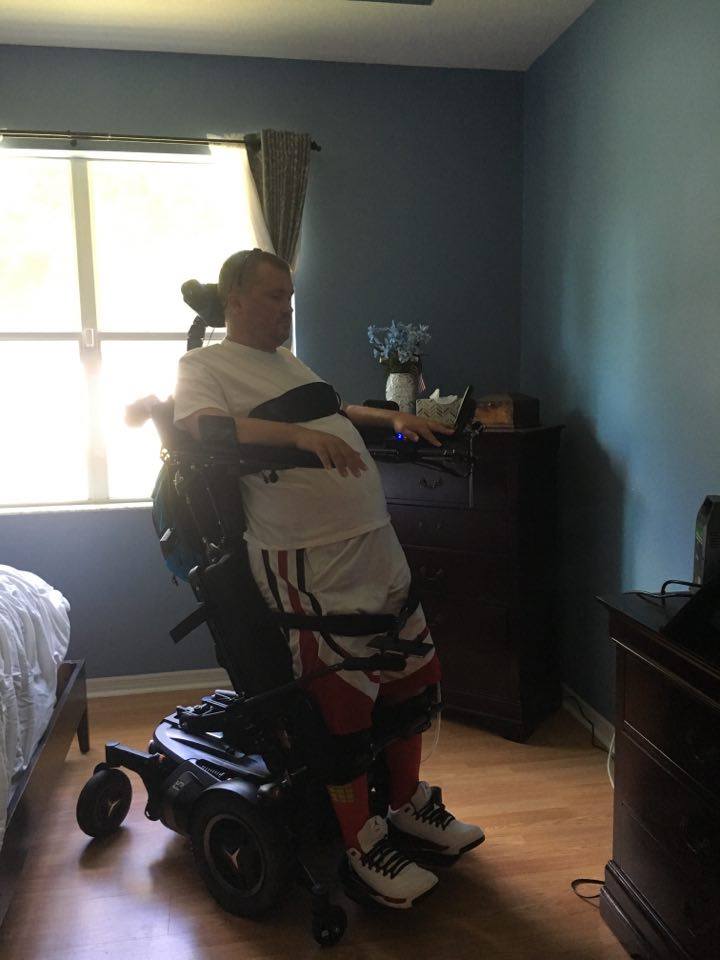
Make Your Insurance Pay for a Standing Power Wheelchair

Make Your Insurance Pay for a Standing Power Wheelchair

Please Feel Free to Use the below Email As a Template

For most wheelchair-bound individuals walking or standing can be not only of great physical therapy but also mental therapy as well. However, there are barriers for the average person in a power wheelchair and manual wheelchairs restricting their ability to obtain a wheelchair that will assist them in standing. Make Your Insurance Pay for a Standing Power Wheelchair.

I received my first power wheelchair while an inpatient rehab at the James Haley VA spinal cord injury center which was a Permobil C400. As a letter below will describe several issues arise from sitting all day and not being able to stand. Given my level of activity even as a C3 complete quadriplegic my medical condition necessitates standing to relieve some of the symptoms and chronic issues I was having.

How to Make Your Insurance Pay for a Standing Power Wheelchair

I’ve tried to list the steps below based on my experience. However, because I use the VA your experience may differ through Medicaid-Medicare-Private Insurance but what remains the same is identifying issues you have from not being able to stand and then obtaining documentation from your doctor advising it is medically necessary for you to stand more often and independently throughout the day.

What made a great difference for us was the difficulty of using a standing frame. Typically, the first thing insurance will recommend is a standing frame. But, to reap the benefits of standing you must be able to do it often. My issue with the standing frame is that it took two individuals and about an hour to get me into it with the Hoyer lift.

How to Make Your Insurance Pay for a Standing Power Wheelchair

Step One.

Realize You Need a Standing Wheelchair.

Do you have bowel and bladder issues? Circulatory issues? Social issues?

Step Two.

Identify Chronic Issues You Have That Standing Would Decrease.

Frequent UTI?

Inconsistent  Bowel Program?

Blood Clots?

Step Three.

Put This Information in Writing and Submit to Your Primary Care Doctor.

Here is a great resource for finding solutions to some of your chronic medical issues through the use of the power standing wheelchair.

http://www.rstce.pitt.edu/rstce_resources/rstce_res_doc/resna_position_on_wheelchair_standers.pdf

Step Four.

Follow-Up (Most Important Step)

Contact the doctor once you’ve sent the information to ensure they receive it and then follow up on a weekly interval to find out where they are at in the process. You may be able to contact your durable medical equipment (DME) provider or your insurance provider as they may give you specific instructions regarding your particular chair.

Step Five.

Be patient

Rome wasn’t built in a day. It takes time and some persistence to obtain expensive medical equipment especially when dealing with government agencies and especially civilian doctors and insurance. Feel free to comment in the section below and I’ll do my best to assist you in any way possible.

My letter to the doctor:

Dr. name omitted,


(Name omitted) I am writing to you in regards to a request for a standing wheelchair to replace my current power chair due to medical necessity. It’s come to my attention that I would need to provide proof of medical necessity to the KT department in order to obtain a standing wheelchair. Specifically the F5-VS from Permobil which is the model the VA typically issues. I have put a link below to the Rehabilitation Engineering & Assistive Technology Society of North America (RESNA) position on wheelchair standing devices as well for your review. Although it’s obvious you understand the benefits of standing because of seeing your desk 🙂


In regards to my specific case the following applies over the past year:

  • history of UTI (two of which led to a hospitalization)
    • standing allows for proper and more complete voiding of the bladder
    • “Urinary Tract Infections Urinary Tract Infections (UTI) is the third most frequent complication for clients with SCI  , and a frequent secondary complication for many other wheelchair users. Prolonged immobility causes hypercalcemia, increased urinary calcium output  , and also reduces bladder emptying . By reducing contributing risks, standing wheelchairs have been shown to reduce the occurrence of UTI for wheelchair users , which could lead to kidney infections”
  • history of bowel obstruction (one incident lead to hospitalization)
    • “Bowel function. Some users have experienced improved bower regularity, reduced constipation, and lesser occurrence of accidental and unregulated bowel movement as a consequence of using wheelchair standers . Elimination of chronic constipation and significant reduction in bowel care time has also been shown as a result of frequent standing  . Chronic constipation can lead to bowel obstruction, a dangerous condition often requiring surgery. Unregulated bowel movements can lead to fecal incontinence at a time when the client cannot be cleaned by a caregiver, increasing the risk of developing pressure sores.”
  • circulatory issues chronic swelling in feet and legs (history of clots)
    • “Users have also experienced improvement in lower extremity circulation as a consequence of utilizing a wheelchair stander . Some benefits are reduced swelling in the legs and feet.”
  • history of blood clots resulting from poor circulation
  • history of pressure sore
    • “Pressure sores When fully standing, pressure is 100% relieved off the Ishial Tuberosities (ITs). However, when tilting or reclining, there is only partial redistribution of pressure underneath the ITs. Pressure ulcers are the primary complication for people with SCI , and many other adults who sit in wheelchairs all day long. There is evidence that users have suffered fewer pressure sores while using standers  , or integrated wheelchair standers .”


Having the ability to independently stand intermittently throughout the day would vastly improve/reduce the issues above as stated by RESNA in the accompanying link. It is RESNA’s position that wheelchair standing devices are medically beneficial for wheelchair users by: enabling them to reach; improving ADL abilities; enhancing independence and productivity; maintaining vital organ capacity, bone mineral density, circulation and range of motion; reducing tone and spasticity, the occurrence of pressure sores and skeletal deformities; and enhancing psycho-social well-being.


I have proven the ability to tolerate standing as I have used the standing frame however due to the nature of that equipment and my active lifestyle I’m not able to use it in a capacity that would be as helpful as a standing wheelchair. Also it requires at least two caregivers or helpers to assist me while the wheelchair allows me to be independent.


The above represents a small portion of all the benefits from regularly being able to place myself in a standing position. Thank you for your consideration and your time I look forward to speaking with you regarding this issue.


http://www.rstce.pitt.edu/rstce_resources/rstce_res_doc/resna_position_on_wheelchair_standers.pdf

Make Your Insurance Pay for a Standing Power Wheelchair


Thank you

Charlie Merritt

C4 Quadriplegic

Check out My Blog quadcapable.com

Facebook.com/quadcapable

Tweet me @quadcapable

Would You Trust This Guy? Mistrust Leads to Lack of Participation in Clinical Trials.

PARTICIPATION IN CLINICAL STUDIES. OR LACK THEREOF.

As I sit here staring at the rain falling outside my bedroom window I noticed that as quickly as it began it has gone away and the sun is shining. I am sure there is a specific meteorological reasons for this which I have no idea about but it makes me think that as quickly as an injury or ailment comes with the right settings it can be made to go away.

This article is meant as an update to my current participation in local trials here in the United States. Also motivated by recent conversation I had with the Miami Project to Cure Paralysis concerning a clinical trial that I am eligible for through their program. Curiously enough I wondered how many people affected with spinal cord injury are participating in the studies and decided to do some research online. Unfortunately with spinal cord injury research there is not a lot online as far as statistical data to analyze the percentage of participation occurring. I did however find interesting statistics concerning cancer and the participation in clinical trials.

Specifically it showed that a higher percentage of adolescents are participating in clinical trials for cancers and with only a 3 to 5 % participation 10 million adults affected with cancer. I would assume that parents of children with cancer are more likely to attempt experimental trials to save their children as opposed to adults with cancer being willing to subject themselves to the same trials. With research showing that all treatments and breakthroughs we have found were birthed from clinical trials why are more people affected with these diseases contributing their time to assist in finding new treatments? From my own personal experience over the course of the last year and in speaking with other spinal cord injured individuals I’ve come up with some conclusions.

TRUST OR LACK THEREOF

Distrust of the medical system in general seems to be one of the major concerns of individuals with incurable diseases and participation in clinical trials. Mistrust: According to a review conducted by the Agency for Healthcare Research and Quality mistrust of research and the medical system is a frequently reported barrier to participating in clinical trials.

Most U.S. adults agree that clinical research participants are making a significant contribution to science. However, 49% also feel that clinical trial participants are gambling with their health and are treated like “guinea pigs.” (Counsel)

What leads to these feelings of mistrust from my perspective is lack of knowledge and ignorance of the clinical trial process specifically here in the United States which is governed by the Federal Department of Agriculture “FDA” and heavily scrutinized and is a process that has been proven to provide treatments and output successfully providing specific treatment goals for a spectrum of diseases and injuries. Specifically a majority of these clinical trials are done by private organizations, universities, and are not run by government scientists looking to squeeze information out of our brains. For the most part the government just regulates trials they do not become involved in them.

LACK OF AWARENESS

A national survey of cancer patients found that 85% of respondents were unaware that participating in a clinical trial was a treatment option for them. (Counsel)

With clinical trials regarding spinal cord injury it is almost as if you only hear about them in whispers and or the possibility or I saw this on the Internet or I watch this video etc. it’s difficult to know what trials are available for from the onset of a spinal cord injury because of the traumatic experience. The University of Miami conducts trials for individuals within nine hours of injury but if you’re not in Miami you don’t know about this if you are Miami you may not know about this. The most popular would be the Christopher and Dana Reeve’s Foundation that is thrust upon anyone with a spinal cord injury but for my own personal experience has not offered anything besides a free book.

So how do we go about raising awareness putting this information in the faces and hands of the people affected by these types of injuries to ensure that they know where to go, what to do, what the requirements are, and how they can become involved with clinical trials?

First and foremost people like me and others with spinal cord injury have to help each other. This is a new form of brotherhood that unless we band together will continue to be an incurable one. We must spread the word however we can to others affected by paralysis to ensure they receive correct information and encouragement to participate in trials. Individually we must be prepared to ask for help, ask for donations, put ourselves in uncomfortable situations that allow for us to put together the logistical and economic parts of being a part of these trials.

I implore everyone who knows someone affected with spinal cord injury to encourage them to seek out clinical trials which can be found here: WWW.CLINICALTRIALS.GOV

I’ve noticed a trend in areas that are heavy in spinal cord trials one being the University of California Los Angeles, Ohio, Miami, and for veterans the Bronx VA and James Haley VA in Tampa.

WWW.MIAMIPROJECT.MIAMI.EDU is a great resource as well and allows for walk-ins which I was over a month ago and immediately I was able to become part of the trials going on there.

I plan on going through every one of these trials that I possibly can and with the help of family friends and complete strangers and some blessings from God I will get to them.

To donate to my cause go to:

GET A T-SHIRT: www.booster.com/cure-paralysis

This fundraiser runs until October 2 so get your T-shirt while supplies last.

MAKE A CASH DONATION: www.gofundme.com/strongman-Charlie

You can also donate through PayPal www.Quadcapable.com/donate


Thank you for your interest in my article to connect with me:

Facebook.com/quadcapable

Twitter @Quadcapable

Check out other articles www.Quadcapable.com/quadblog

counsel http://iccnetwork.org/cancerfacts/ICC-CFS11.pdf


Opinion: Pitfalls of US Stem Cell Research

According to the NATIONAL INSTITUTE FOR SPINAL CORD STATISTICS there are currently 270,000 recorded spinal cord injuries in the US alone. Increasing at a rate of 12,000 annually our particular percentage of the population is minuscule (1). Which leads to the first pitfall for US stem cell research for SCI (spinal cord injury):

  1. Because of the small percentage of SCI in the US and globally funding for traumatic spinal cord injury treatments and trials are limited. For example two of the major contributors here in the US are private organizations. Both Christopher and Dana Reeve’s foundation as well as the Miami Project To Cure Paralysis are privately funded organizations with their founders being a quadriplegic themselves (2) (3). How do we expect to find a cure without proper funding from government? It’s my opinion that the biggest contribution from our government is the restrictions placed on research by the FDA. Thus further slowing the process of not only treatments for spinal cord injury but dozens of other illnesses from ALS to blindness.

Recently I made a trip to the Miami Project and spoke with one of the individuals directly involved with Schwann cell clinical trials. Currently after two decades of animal trials the FDA finally approved human clinical trials for thoracic and soon cervical patience. However some requirements have led to very few SCI patients being accepted into the trials. For instance out of 500 only 2 were accepted want to cover requirements is the scar on the spine or the lesion can be no bigger than 2 cm (4). Also the FDA only allows for C-5 and reason below to be a part of any study regarding stem cells and spinal cord research here in the US. So the second problem is:

2. The requirements to be a part of any clinical trial first themselves the US rule out 99% of SCI patients. And in looking at the amount of time it took to transition from animal to human trials a further transition into widespread human trials appears to be very far in the future.

Unfortunately for us as well the FDA has rejected embryonic stem cell’s due to possible tumor growth (5) but has approved the Schwann cells even though reportedly by themselves do not repair the spinal cord. “Thus, the endogenous regenerative events that occur after injury fail to repair the spinal cord.” (5) which leads to the 3rd problem:

3. We’re using the wrong stem cell’s due to the fear of a possible tumor created from the embryonic stem cells which are the most pliable the FDA has ruled them out.

So what are we to do? Well in other parts of the world certain restrictions do not exist, certain regulations do not carry over, they are doing the research now on the front lines. So we do what all sick people do when we are looking for a cure we become “stem cell tourists.” Meaning we go to the countries that are doing the trials. Currently there are several places including Panama, Thailand, China, India, to name a few. They have paid for ads on Google directing you to their websites where patients have beaming testimonials concerning their treatment and hope for success.

Why isn’t the US on the forefront of this? Why is our country lagging behind on treatments that could heal and save people like me and millions of others with the potential that stem cells create? Is it that big pharmaceutical companies don’t want cures for diseases that leave people taking meds for decades, insurance companies wanting you to be sick wanting to you to pay your premiums wanting to increase your deductibles? I encourage you to look for private companies doing stem cell research in the US most either go out of business because of lack of funding or sell to companies outside the US. Look up Osiris a company in Maryland which recently sold out because of lack of funding. Has money become so important that health takes a backseat in the US?

I want everyone reading this not to look at it as a conspiracy theory but to think realistically about the state of the US and why we are so far behind other countries. Something needs to change, people need to come together, raise awareness, speak out, not just on Facebook, but in the streets rally behind the causes you believe in, be a part of something.

Charles Merritt

if you like what you read and want to help click here to donate.

REFERENCES:

  1. J Spinal Cord Med. 2012 Jul; 35(4): 197–198.

    http://www.ncbi.nlm.nih.gov/pmc/articles/PMC3425873/

2. The Miami Project http://www.thebuonicontifund.com/Page.aspx?pid=201

3. Christopher and Dana Reeve Foundation http://www.reevebigidea.org/

4. http://www.miamiproject.miami.edu/who-can-participate

5.Spinal Cord Med. 2009 Apr; 32(2): 105–114.
hTTP://www.ncbi.nlm.nih.gov/pmc/articles/PMC2678281/


Three Things Not to Do As a Quadriplegic

There are many hurdles living life as a quadriplegic for the most part a lot of them are similar to your average everyday ambulatory person. Obviously relationships, money, and day-to-day tasks etc. for the void that is our 24 hours a day life. There are certain things I found to be helpful when it comes to living life as a quadriplegic and in general. These aren’t specific to my injury but my situation is a great example of how to stay positive and always look forward.

1. Stop looking at the world as what you cannot do and start focusing on what you can do.

If there’s one thing I’ve learned through this injury despite my therapist’s persistence that I can do everything I did before is that I cannot. Understanding that simple fact has lead me to a greater acceptance of my limitations but also an increased motivation to improve on what I can do. I’m not saying to not strive for the unknown or for the impossible don’t stop shooting for the stars because you can wind up on the moon what I am saying is to not dwell on the negatives but focus improving positives.

2. Stop being so proud and allow people to help you.

So many people walk through life, no pun intended, feeling as if they are alone for no better reason than being too proud or afraid to ask for the help that they need. There are so many things we can do as human beings if we group together there is power in many but steps need to be taken by the individual to build upon the community. If I was told a year ago that I would be asking for help or donations for myself I would’ve laughed in your face but I realize now that it is not about that, it is about being a part of something bigger than yourself. That in itself is very powerful.

3. Don’t take your frustrations out on those people.

Probably the most important thing because of the situation you find yourself in as a quadriplegic you may feel like lashing out. I’m sure a lot of us feel this way without adding to it the frustration of not being able to use your arms and legs. When I feel frustrated I attempt to put myself into a meditative state of retrospection in hopes to find resolution to the current problem. For me that usually means asking others for help whether it be the people in my immediate circle, groups am involved with, or my network of friends and family. But what I do not do is blame others for my issues for my problems for my handicaps I do not treat them like any of this is their fault and I make sure I own my decisions whether good or bad.

Funny thing is while writing this I was served an eviction because my landlord didn’t pay her mortgage so bad things come and is not about the hurdles put in your way or the walls that life throw up it’s your ability to run and jump to move around to find answers and keep moving forward that defines you. So stop dwelling on what you cannot do and start working on and proving the things that you can.