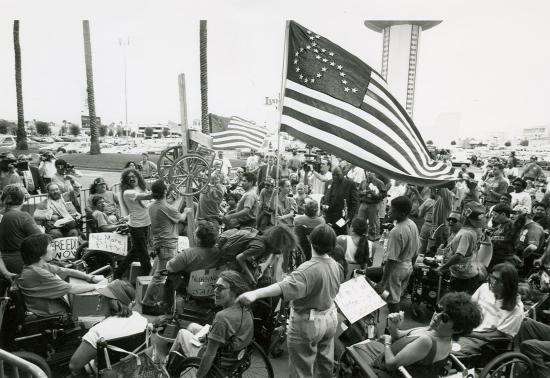
The American Association of People with Disabilities (AAPD) is a convener, connector, and catalyst for change, increasing the political and economic power of people with disabilities.
Money Follows the Person (MFP) is a Medicaid program that has helped over 75,000 people with disabilities and seniors move out of nursing homes or institutions and back into their communities. MFP restores the dignity and liberty of people with disabilities by promoting and supporting choice and community living.
Funding for the MFP program expired in 2016, and states have already scaled back their plans by approximately 40%. We need your help and advocacy to get the Senate and House of Representatives to pass the bipartisan EMPOWER Care Act (S.2227 and H.R.5306), which would extend and improve the MFP program. Last year was the first time that the number of people that transitioned to the community had declined.
By passing the EMPOWER Care Act and funding the Money Follows the Person program, Congress can help more people with disabilities transition out of institutions and nursing homes and back into the community. Without action NOW, more people will be trapped in institutions.
Help people living in nursing facilities and other institutional settings move back into their communities!
Take Action
Use the advocacy tool below to send an email, tweet, and Facebook post directly to your Senators and Representative to tell them to support the EMPOWER Care Act and fund the MFP program.
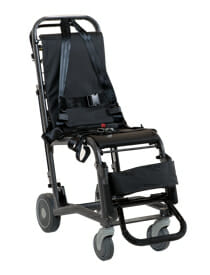
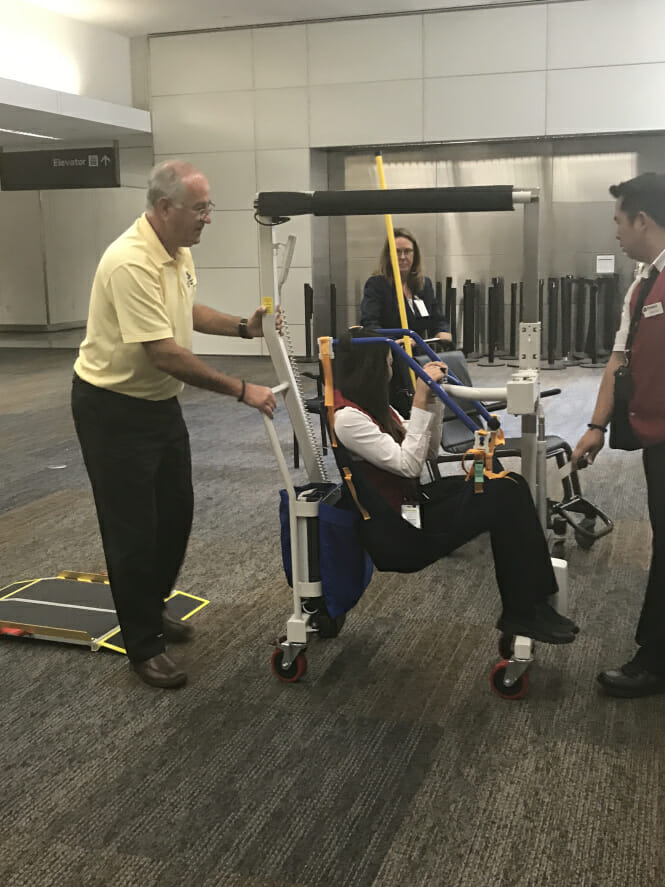
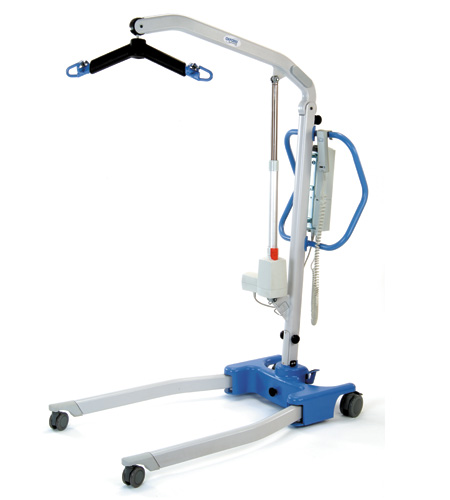
Training was provided @MCO on several different dates in 2017 and 2018… Training was free and was offered to any airline or service provider who wished to attend.. The purpose of the free training was to make sure their were trained personnel to utilize the Eagle lift that was purchased by MCO…
Recently, I traveled through Orlando’s International Airport to Minneapolis-St. Paul where I attended a portion of the Paralyzed Veterans of America National Convention. As a C3 complete quadriplegic, traveling often takes its toll. Due to the limited training of staff and airlines reluctance to understand my type of disability; I am disinclined to travel by airline. Having only traveled by airline once before (now 6: 2019) as a wheelchair using quadriplegic.
…the Orlando airport has ultimately worsened in respect to my needs.
At that time (2016), the Orlando airport utilized a lift system that properly on-boarded me to my seat. The issue then was that the gate agents and airport employees did not realize that the lift system existed, but were able to finally locate it with the paramedic services and
EMS.
Fast-forwardto May 2018 and apparently, the Orlando airport has ultimately worsened in respect to my needs.
According to the gate agent at the Delta terminal, they could no longer use the lift system due to the “training cost” associated with ensuring their employees were properly certified on the equipment. I used the device two years before but was told not all terminals or airlines have paid for the training.
…at the Delta terminal, they could no longer use the lift system due to the “training cost”
Airline Travel As a Wheelchair Using Quadriplegic
The general manager of Prospect Airport Services explained that Delta’s reasoning was accurate, and they could not even occupy the terminal because of insurance liability. I communicated to the gate agent the liability of manually lifting me and transferring me, is greater than if they were to use the lift. They quickly redirected back to the training cost. Why aren’t the airlines paying to train their employees? They need to know proper techniques to safely transfer customers with disabilities.
Utilizing the Eagle Lift for Airline Traveler with Limited Mobility
This is why airline travel as a wheelchair using quadriplegic and other people with disabilities is difficult. Further reducing our ability to live a normal life.
Why aren’t the airlines paying to train their employees?
Transferring with inappropriate equipment poses risks to the physical and emotional health of people with disabilities. According to Prospect Airport Services, the training cost $4000 per employee (it’s actually free).
Airlines Will Not Pay for the Training
Given that one of my tickets was $700; I assume the airlines could afford to provide passengers with dignity, respect, and safe mode of transfer. This is not the case at either the Orlando airport, that had the equipment, or the Minnesota St. Paul airport which did not have the equipment.
I made it through my travel with only minor bruises and a small device broken from my wheelchair. I believe that airline employees should have a better understanding to be gentle with this equipment. Ask anyone with paralysis if they do not have their wheelchair it is the same as someone taking their legs away from them.
Get Ready for More Wheelchair Users
Orlando is home of the 2018 38th annual National Veterans Wheelchair Games with several hundred wheelchair users flying into the Orlando airport. Accommodations will have to be made for these athletes at every gate and in every terminal. Great work has been done with the air access laws, Continuing efforts through air access laws is necessary to eliminate these issues.
Home accessibilityAreas of the Home That Can Improve the Accessibility
In a perfect world, all homes would be built, so they are accessible for people with disabilities. While many homes are not built with accessibility in mind, you can make changes to them to improve their accessibility level. Here are the areas of most homes that can be improved for accessibility reasons.
Keep an Open Floor Plan
Even if your home does not have a completely open floor plan, think about arranging the furniture in a way that opens up the floor space. Look around all the rooms, hallways, and bathrooms for areas that could be a problem for accessibility. Removing clutter can also help with accessibility. There are also portable wheelchair ramps that allow for accessibility for wheelchairs inside of the home.
Flooring
Both power chairs and wheelchairs move around more smoothly when they are on hard surfaces like hardwood or tile floors, than carpeting. Another problem with carpeting is in areas that have heavy traffic, the padding wears down and leaves tracks. Flooring is an important step to improving the accessibility of a home.
Accessibility for entryways
Getting inside of a house is important, and there are many ways that you can make your home accessible. Think about the area that has least amount of steps, and room for a wheelchair ramp. Wheelchair ramps do not have to be large, or even insight. Many people are moving their wheel chair ramps into their garage or back deck, as these need much smaller ramps, and are in areas that are safer to use.
Tight Spaces.
Most home’s doorways are only 30 inches wide, and this is a problem since most wheelchairs are between 24 and 30 inches wide. You should be able to travel through a door in a simple and safe manner. For most wheelchairs, you should have doorways that are 36 inches. There are homes and apartments that have these doors built in, but you still should measure to make sure. If you have stairways in your home, you should think about adding a stair lift so you can travel safely around your home. There are stair lifts that fold up, so there is space when you are not using the lift. The bathroom also has to be larger since you need to be able to turn around in a wheelchair. Walk in/wheel in showers are also great options, as you do not need to worry about falling into a tub.
Having a home that is designed with accessibility in mind is hard to find. However, you can improve the accessibility of any home with some work, and thinking outside of the box. There are many items that you can change in a house to make it more accessible, without making huge changes.i
Hyatt Place Tampa Busch Gardens Fails ADA Compliance
Before I became a quadriplegic I did not notice, doorway width, shower rails, turn radius, passage of lift under bed issues, and, you know, those things able-bodied people typically don’t look for in a hotel room. Now because of the additional burden put on my fiancé as my caretaker I cannot overlook the necessity of having a room that fits our needs while facilitating her ability to take care of me. The biggest problem for me in most hotel rooms that I require a floor lift to get into bed. The inability to use the lift creates major difficulties. Hyatt Place Tampa Busch Gardens Fails ADA Compliance
Hyatt Place Tampa Busch Gardens Fails ADA Compliance
If you haven’t noticed (and, I don’t blame you for not noticing) most hotels have switched to platform style beds to make it more convenient for their housekeeping staff when cleaning the room. I.e. nothing gets under the bed because there are wooden or metal slats acting as the bed frame. This same convenience creates an issue for anyone needing the use of a lift to gain access to bed. In particular, many handicap individuals with ALS, MS, and spinal cord injuries who travel.
ADA non-Compliance
The Hyatt Place in Tampa, Florida has this particular issue however as a caveat to that they are also the hotel choice for major spinal cord hub for the Veterans Administration.
Hyatt Place, Tampa, FL Busch Gardens is not compliant.
James Haley VA hospital has been very good to me however the contract department has made a mistake in not vetting the hotel they use to place out of town veterans that need a place to stay. In particular there are no passage for lifts under the bed and zero turning radius for anyone with a wheelchair who can transfer into bed.
At the time I didn’t know it was against the Americans with Disabilities Act and that what they were doing to be considered breaking the law.
Here is the letter I wrote to my advocate at the VA 30+ days ago:
I have mentioned this issue in the past and took it upon myself to look up the Florida state statutes regarding the requirements for hotels at least in our state for accommodating lift devices in their handicap rooms. I recently have had two overnight stays at the self-care unit contracted by the James Haley VA which is not meet these requirements. Specifically Florida Statute 806.4 within the Florida Accessibility Code. I have pasted a picture of statute below.
My advocate in Tampa has been made aware of this issue as well as the patient advocate for the James Haley VA. Currently to my knowledge absolutely nothing has been done to advocate for the correction of this issue. It appears that the Veterans Administration has contracted with a hotel that does not meet state requirements for handicap accessibility and that needs to be corrected not only for myself but for every veteran traveling from outside of Tampa that needs the use of the self-care hotel.
The immediate problem is that all the beds within the hotel are on platforms which do not allow for a a lift to pass underneath. According to the statute a percentage of the hotels beds within the accessible rooms are required to be on frames that allow for the passage of a list.
Thank you for your assistance in this matter. I can only assume that Orlando VA may have the same issue as I have run into it outside the confines of the VA self-care program.
Response as of April 22, 2016:
I went over to the Hyatt Place Hotel Tampa Florida and talked to the Assistant General Manager Paul Johnson about the beds and turning radius in the rooms. Paul said they have been talking to the corporate office and the VA about the situation. Hyatt’s Corporate office is working on a solution, but he didn’t have a time for that solution. HBA asked if the bed frames could be put on something to give clearance for the hoyer lift, and he said the way the frames are made, there isn’t a way to lift them. The rooms in question were occupied, so I didn’t get a chance to physically look at the way room was set up.
So now I’m going to spread the word and see if direct communication with the Hyatt Place Hotel hotel will help simplify the solution. In particular changing a portion of the rooms to bed rails that allow for a passage of the list as per the Florida statute. Any assistance with this please let me know. I will add to this as it becomes necessary.
Statute: 553.504 BUILDING CONSTRUCTION STANDARDS
(4) In motels and hotels a number of rooms equaling at least 5 percent of the guest rooms minus the number of accessible rooms required by the standards must provide the following special accessibility features:
(a) Grab rails in bathrooms and toilet rooms that comply with s. 604.5 of the standards.
(b) All beds in designed accessible guest rooms must be an open-frame type that allows the passage of lift devices.
(c) Water closets that comply with section 604.4 of the standards.