Be gentle. Those are my legs! Airline Travel As a Wheelchair Using Quadriplegic

Airline Travel As a Wheelchair Using Quadriplegic

UPDATE FROM DIAMOND PASSENGER LIFT CO.

Training was provided @MCO on several different dates in 2017 and 2018… Training was free and was offered to any airline or service provider who wished to attend.. The purpose of the free training was to make sure their were trained personnel to utilize the Eagle lift that was purchased by MCO…

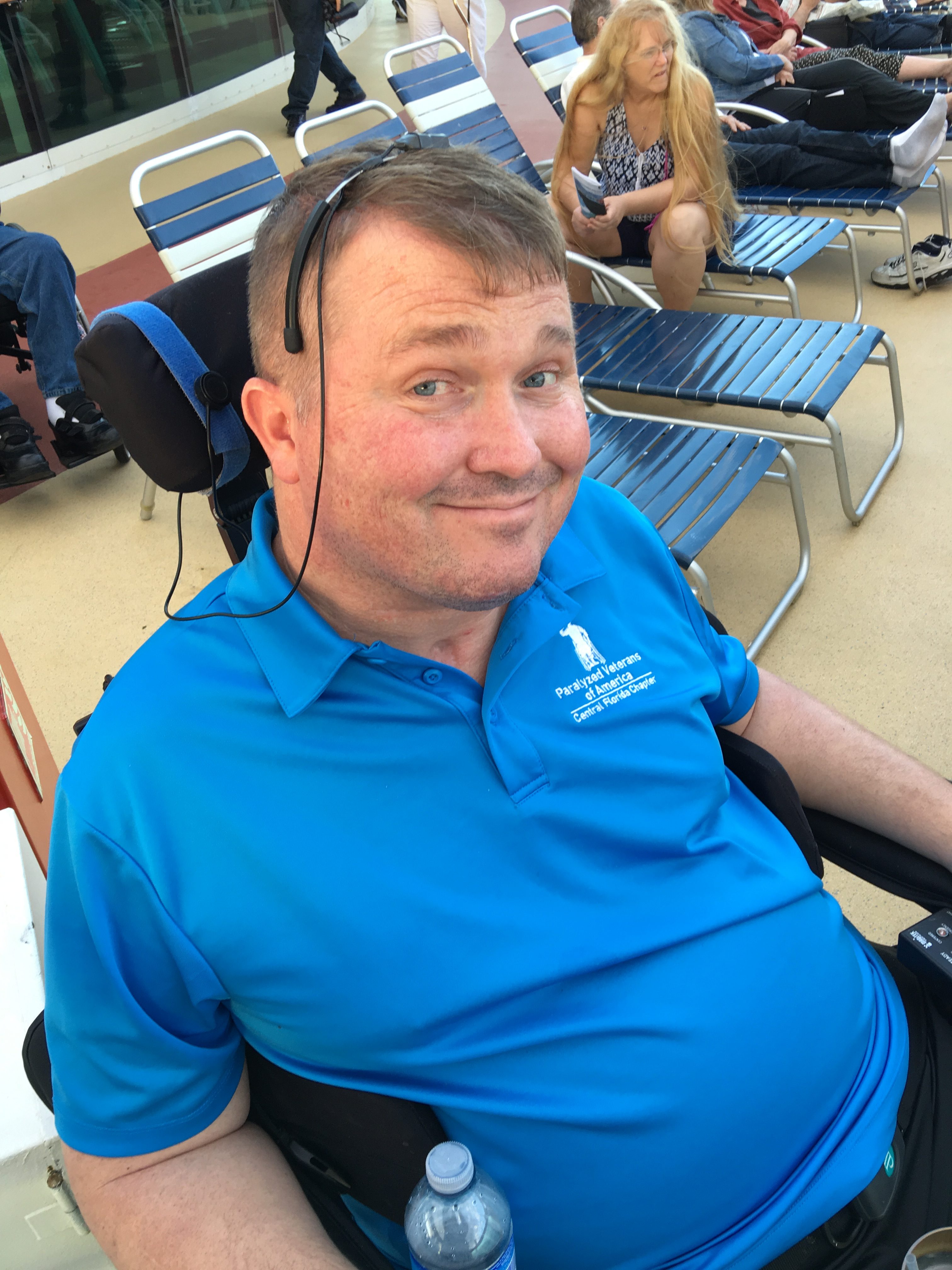
Recently, I traveled through Orlando’s International Airport to Minneapolis-St. Paul where I attended a portion of the Paralyzed Veterans of America National Convention. As a C3 complete quadriplegic, traveling often takes its toll.  Due to the limited training of staff and airlines reluctance to understand my type of disability; I am disinclined to travel by airline. Having only traveled by airline once before (now 6: 2019) as a wheelchair using quadriplegic.

…the Orlando airport has ultimately worsened in respect to my needs.

At that time (2016), the Orlando airport utilized a lift system that properly on-boarded me to my seat. The issue then was that the gate agents and airport employees did not realize that the lift system existed, but were able to finally locate it with the paramedic services and
Airline Travel As a Wheelchair Using Quadriplegic

EMS.

Fast-forward to May 2018 and apparently, the Orlando airport has ultimately worsened in respect to my needs.

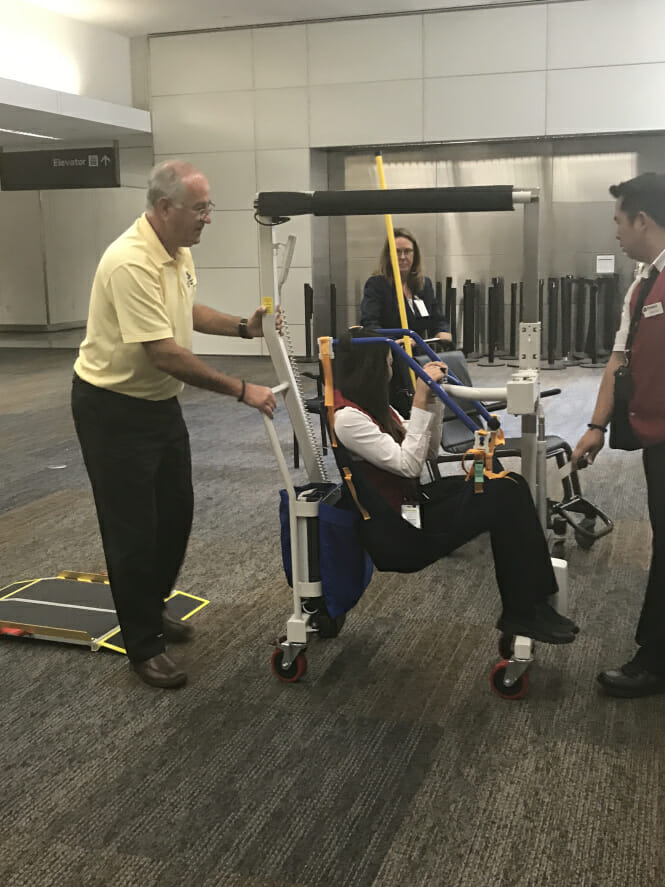
According to the gate agent at the Delta terminal, they could no longer use the lift system due to the “training cost” associated with ensuring their employees were properly certified on the equipment.  I used the device two years before but was told not all terminals or airlines have paid for the training.

…at the Delta terminal, they could no longer use the lift system due to the “training cost”

Airline Travel As a Wheelchair Using Quadriplegic

The general manager of Prospect Airport Services explained that Delta’s reasoning was accurate, and they could not even occupy the terminal because of insurance liability. I communicated to the gate agent the liability of manually lifting me and transferring me, is greater than if they were to use the lift.  They quickly redirected back to the training cost. Why aren’t the airlines paying to train their employees?  They need to know proper techniques to safely transfer customers with disabilities.
 Airline Travel As a Wheelchair Using Quadriplegic
Utilizing the Eagle Lift for Airline Traveler with Limited Mobility

This is why airline travel as a wheelchair using quadriplegic and other people with disabilities is difficult. Further reducing our ability to live a normal life.

Why aren’t the airlines paying to train their employees?

Transferring with inappropriate equipment poses risks to the physical and emotional health of people with disabilities.  According to Prospect Airport Services, the training cost $4000 per employee (it’s actually free).

Airlines Will Not Pay for the Training

Given that one of my tickets was $700; I assume the airlines could afford to provide passengers with dignity, respect, and safe mode of transfer. This is not the case at either the Orlando airport, that had the equipment, or the Minnesota St. Paul airport which did not have the equipment.

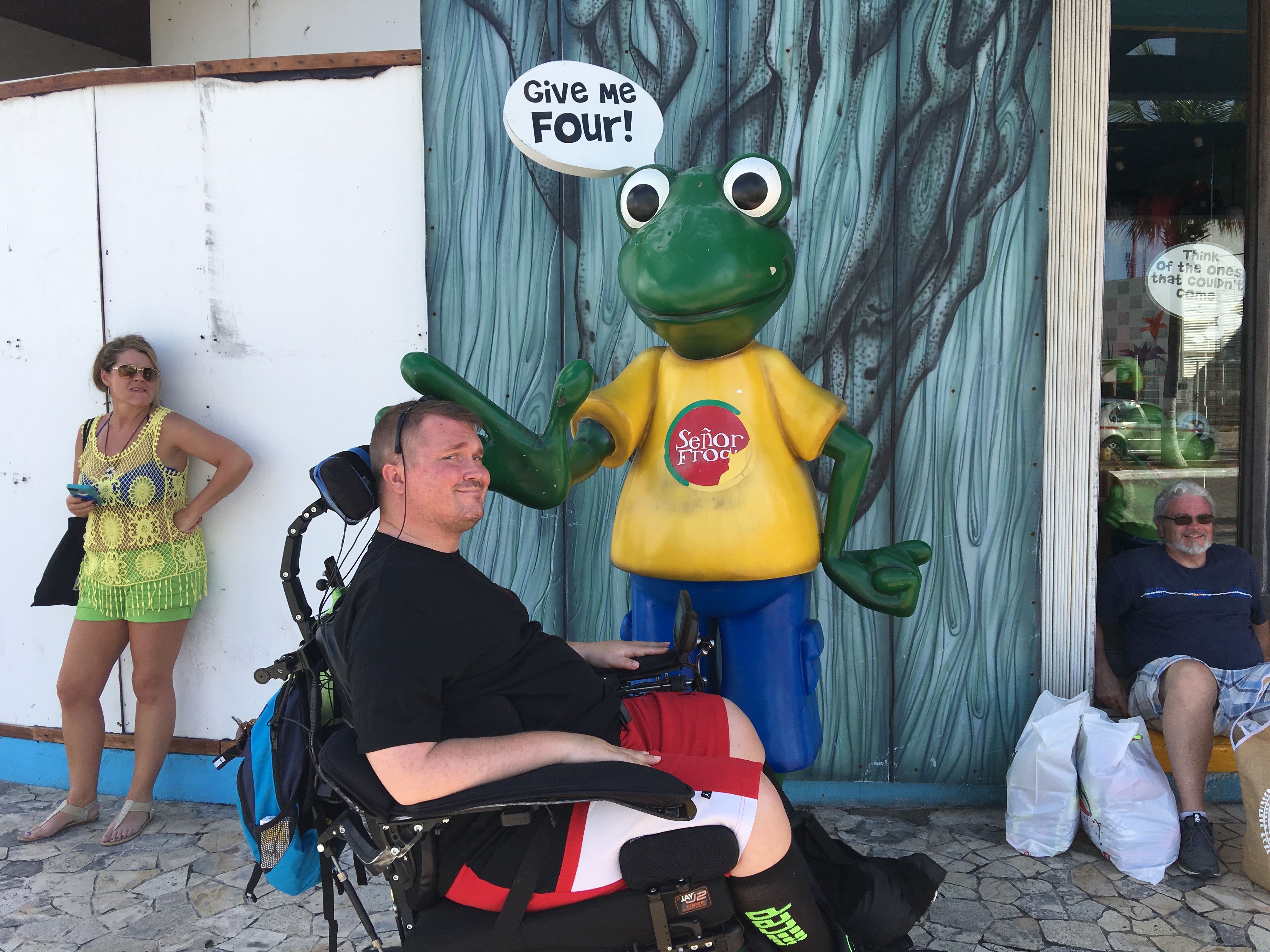
I made it through my travel with only minor bruises and a small device broken from my wheelchair. I believe that airline employees should have a better understanding to be gentle with this equipment. Ask anyone with paralysis if they do not have their wheelchair it is the same as someone taking their legs away from them.

Get Ready for More Wheelchair Users

Orlando is home of the 2018 38th annual National Veterans Wheelchair Games with several hundred wheelchair users flying into the Orlando airport. Accommodations will have to be made for these athletes at every gate and in every terminal. Great work has been done with the air access laws, Continuing efforts through air access laws is necessary to eliminate these issues.

Thank you
Airline Travel As a Wheelchair Using Quadriplegic

Disabled Travel: Five Things You Should Know
Disabled Travel: Five Things You Should Know about Cruising As a Person with Disabilities

First off, I would like to thank Flying Dutchman Travel for providing my accommodations for this vacation. Also The Central Florida Chapter Paralyzed Veterans of America who selected me to participate on this excursion. Disabled Travel: Five Things You Should Know.

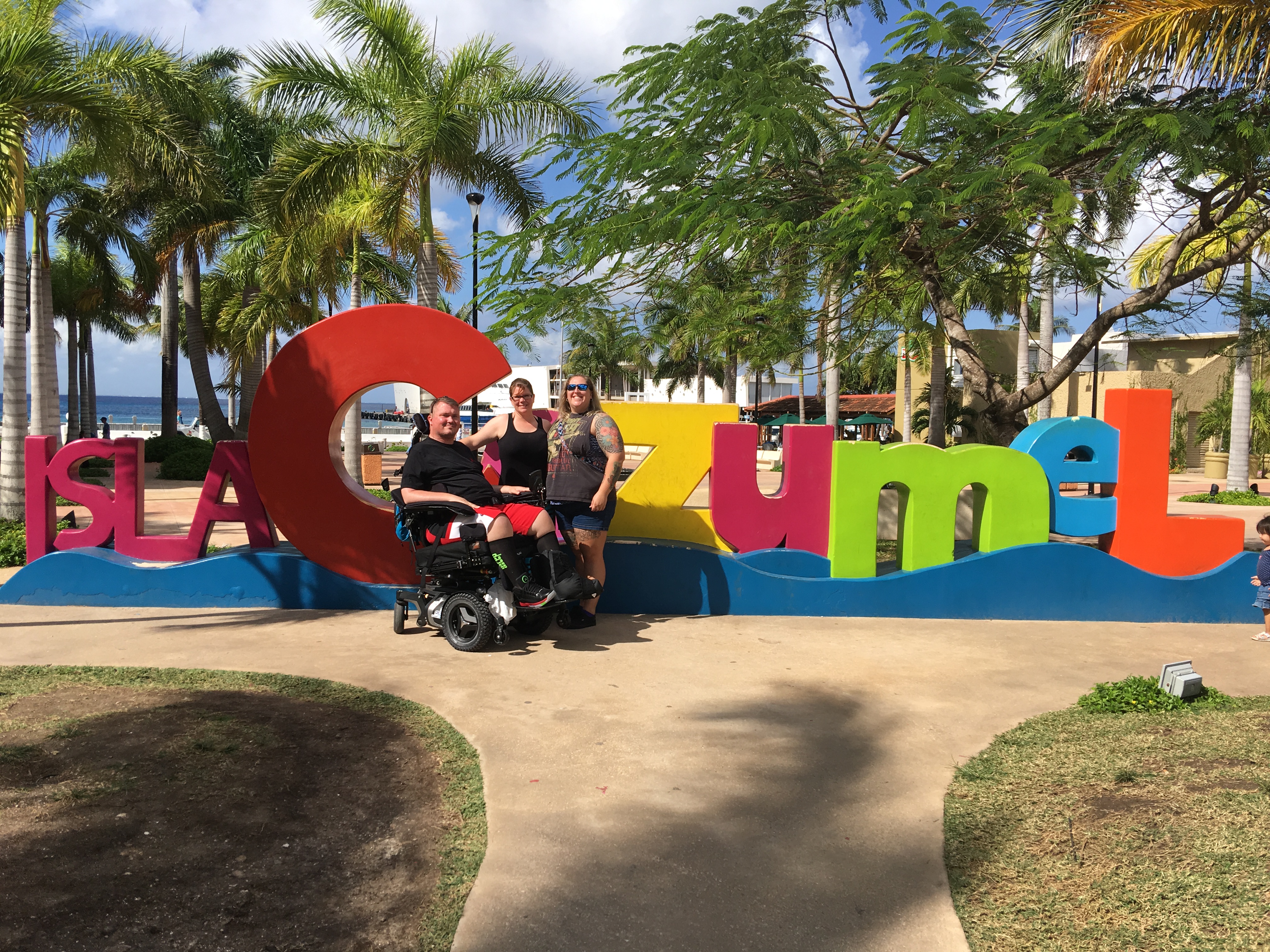
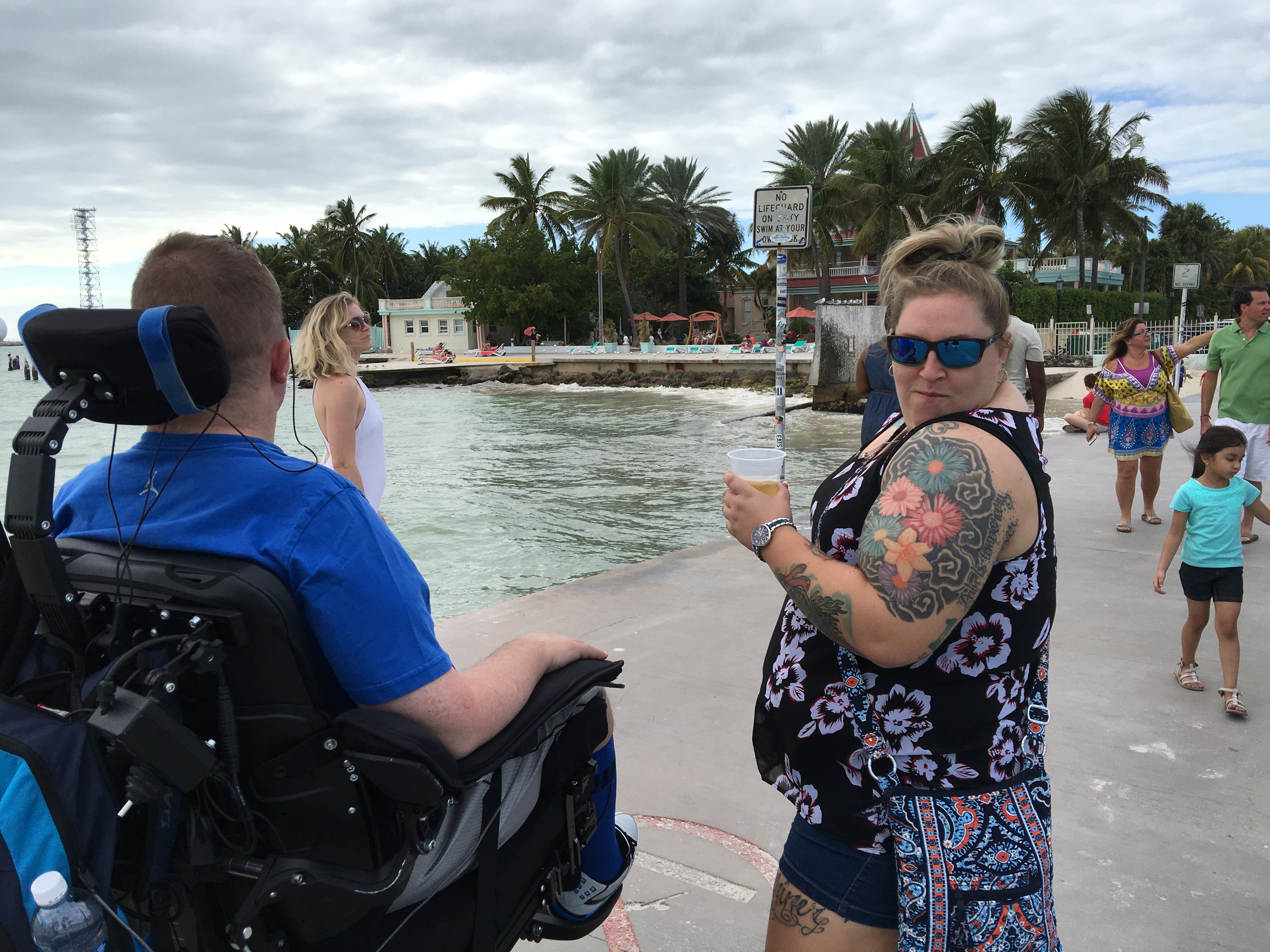
A little background about myself. I am a C-3 complete quadriplegic who travels with his fiancée, friends, and family.  Due to needing someone to take care of my particulars. This is my second cruise vacation and my first after becoming a quadriplegic. I am an avid traveler and have become an advocate for persons with disabilities. This was a five day country cruise on the Royal Caribbean Brilliance of the Seas with stops in Key West and Cozumel. Here’s a list of a few things I believe are necessary as you embark on any type of vacation as a person with disability. Using my cruise as an example.Disabled Travel: Five Things You Should Know

Disabled Travel: Five Things You Should Know

    1. PROPER PREPARATION LEADS TO A GOOD TIME. I am lucky enough to have a tremendously smart and loyal fiancée. Who has gotten our preparation for travel down to a science. For the cruise we had to ensure that we were able to charge my power chair, bring along a manual chair in case of power chair failure, and a floor lift. We also tried out our new portable shower chair (not that great). Along with the equipment that allows me to scoot around we also brought a floor lift to get me in and out of bed. We also packed several suitcases full of other accouterments associated with my disability.
      1. Make a list
      2. Double Check Your List
      3. pack everything and double checked again
    2. FIND APPROPRIATE ACCOMMODATIONS: The cruise lines are very accommodating when it comes to people’s disabilities specifically, wheelchair users. Our room was over-sized by about 150 ft.² with a very large role in shower and a space for a king-size bed and a couch. We double checked with our travel agency as well as the cruise line to ensure there was ample space under the bed for our lift to operate correctly as well as double checking that the shower area was accessible as well. *Even though the website says it is always call and double check.
    3. RECONNOITER YOUR DESTINATIONS:

      Disabled Travel: Five Things You Should Know

      In the Marine Corps whenever we went to another country or training in certain environments we were given a detailed briefing and handouts courtesy of the CIA that described that specific area its demographics. Where to go and where not to go. Whenever traveling abroad make sure you have some understanding of the culture as well as any types of threats that may be applicable i.e. kidnapping. Also with Google maps most of the tourist destinations you can Street view. For people like me that like to run amok it may not be as simple.

    4. Disabled Travel: Five Things You Should Know Always bring a buddy.
    5.  REMAIN PATIENT: Not only with the local populace but with your caregivers and the people with you who may not have a complete appreciation for your lack of mobility. I try to keep a big smile on my face and keep everyone moving because typically I’m the point man. Understand that the people around you specifically, the strangers don’t understand you or your disability but for the most part will do everything they can to accommodate you. Don’t be afraid to ask. 
    6. REMEMBER, YOU ARE ON VACATION: the main thing is to try to have as much fun as possible and not let your disability drag down. Don’t be let down by the things you cannot do (I didn’t get to see the Mayan ruins). But get excited about the things you can do (midnight party on the cruise ship). Believe it or not the person with a disability is usually the center of attention and whether positive or negative your vibe carries on to the people around you.

      They are all looking at you and how you are reacting to the situation. The more positive you can be the better time that will be had by everyone. Learn how to laugh off detours on the ship. Hallways are very small. But the good news is there isn’t much other issues with the boat besides small hallways.  the accessible rooms are close to the end of the hallway and near the elevators.

      So this alleviates the need to go down the hallway. As always if you have any specific questions feel free to contact me and I hope you find your next vacation and can use some of my insights to make it an enjoyable experience.

Disabled Travel: Five Things You Should Know

Disabled Travel: Five Things You Should KnowDisabled Travel: Five Things You Should Know

How I Became a Quadriplegic

THE START

There is nothing better than cruising on your new boat in the Gulf of Mexico enjoying the sun the surf and your beautiful wife (fiancé).  That’s exactly how my day was going on August 23, 2014, and how I became a Quadriplegic. Started off early that morning at my house in Central Florida where we packed up our boat sunscreen everything else we needed and headed to Anclote River Park to put our boat in the water. After a three-hour drive and a stop at Publix to pick up the usual boating drinks, we finally got the boat backed into the ramp.

THE RAMP

The ramp was something we hadn’t experienced before. There was a strong current from the river and when I put the boat in we had our first issue of the day. Once we released the boat from the trailer our mooring line came loose and the boat drifted to the ramp next to us. I jumped in to tried to push the boat as I swam, which wasn’t the smartest move, and our neighboring boaters helped out as well.  Finally, after 20 minutes of struggle, we got her secured to the dock.  Put the cooler in then backed out. We then started moving through the channel to rendezvous with our friends in their boats.

THE MEETUP

Originally, the plans were to meet on the eastern side of Anclote Key. When we arrived at the designated spot there was no one to be seen. Calling one of our friends we found that they were on the western side of the island, the Gulf side. Meeting them in the channel and following him and his wife to the other side of the key.

Anclote Key click update
We have arrived!

THE FUN

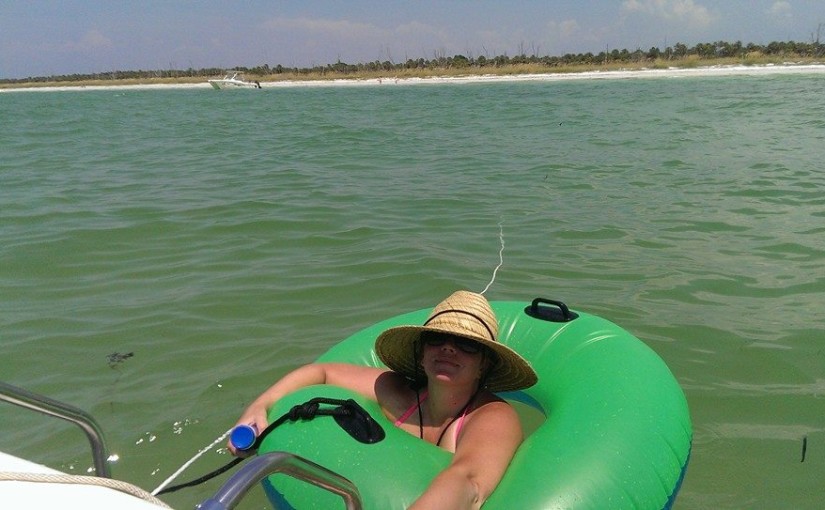
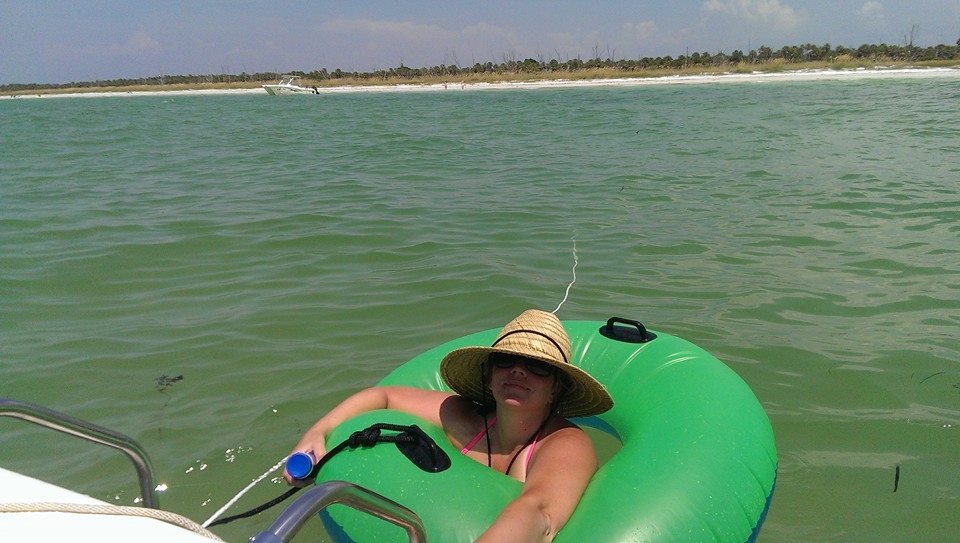
It only took us about an hour and three people to get anchored. But is well worth the effort if you see from the picture above just how beautiful it was that day. And yes that is my beautiful fiancée Tina floating in 5 to 6 feet of water enjoying the sun.  Shortly after arriving and a couple dives off the boat later I made one final dive into the water that changed my and my family’s life forever.

THEN IT HAPPENED

I finally accepted my fate.  I couldn’t swim.  I couldn’t breathe. I just floated.

Upon diving into the water I blacked out and then woke up floating several feet from the bow of my boat at that moment I knew something was wrong.   Gasping for air I yelled for Tina who thought I was joking. So I floated there until I finally accepted my fate.  I couldn’t swim.  I couldn’t breathe. I just floated. I was going to drown and die right then.  Thankfully, at that moment our friends noticed me and swam over. They began to pull me to the shore.  Where I could breathe again.  But nothing below my neck was working.  I was paralyzed.

At that point, I called for Tina again and she came to the beach with the rest of us and dialed 911. Shortly after, fish and wildlife, The Sheriff’s Department, Coast Guard, and then the Bay flight rescue helicopter picked me up and flew me to the hospital. After being put on and off two different boats the helicopter was chosen to be the best choice.

THE REST

A lot of the hospital stay was chronicled through my dad’s Facebook page and a fan page set up on Facebook as well. I plan on occupying a lot of this blog with a lot of those posts. Some were very moving.