A hotel can have a beautiful lobby, helpful employees, and an accessible room that still doesn’t work for your body or equipment. A wheelchair symbol cannot tell you whether a lift fits under the bed. A photograph of a shower cannot tell you whether your caregiver has room to help.
The useful conversation starts when everyone stops guessing. Before committing to a room, get someone at the property to check the things your routine actually requires. The Travel Bible’s hotel section is the starting point. This is the call that turns that planning into answers.
Start with your requirements, then find the right person
Write down the few details that determine whether you can stay there: wheelchair dimensions, transfer side, bed-height needs, lift model, bathroom equipment, and room for whoever assists you. Use measurements from your working setup and the equipment manufacturer’s instructions. You don’t need to explain your entire medical history to describe the space you need.
Call the property directly and ask for someone who can inspect the room, such as an onsite manager or engineering employee. Central reservations may know the room category without knowing what sits underneath its mattress. If the room is occupied, arrange a callback after it is empty rather than accepting an estimate.
Ask about the bed above and below the mattress
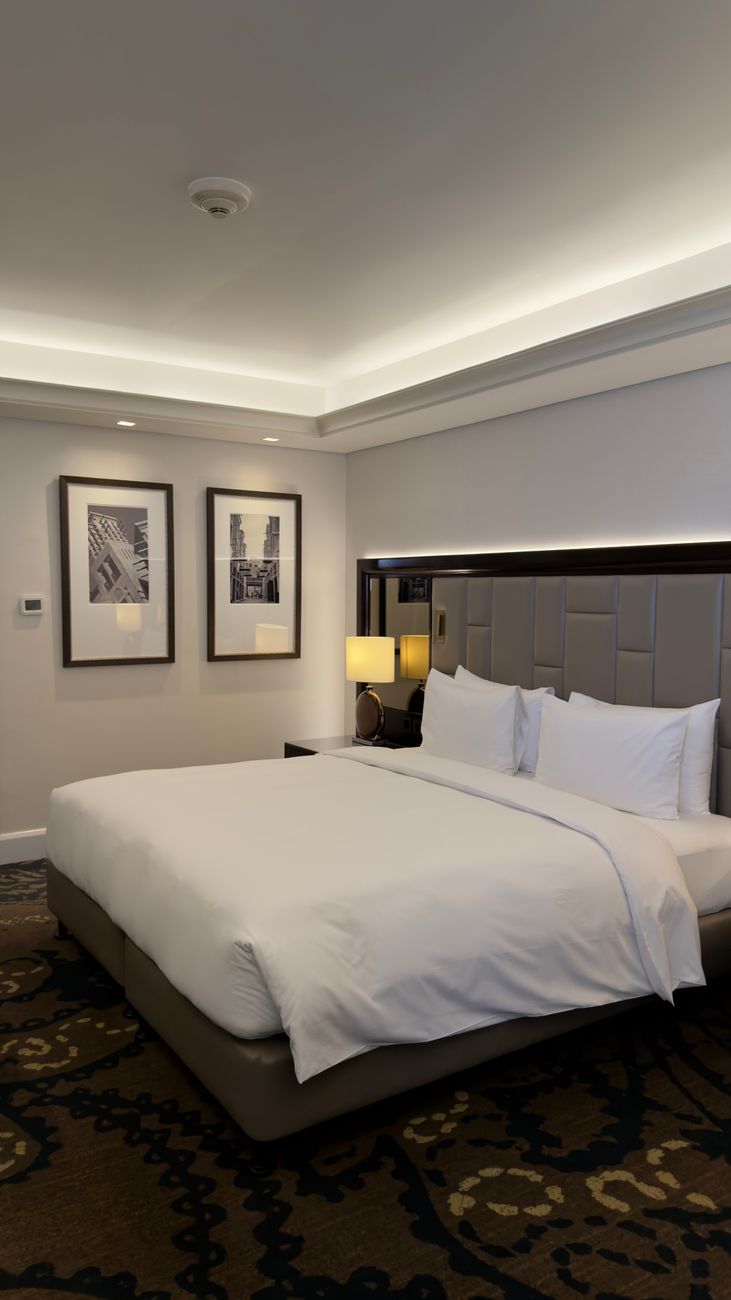
Get the height from the floor to the top of the mattress. Ask about toppers and whether the bed pictured is the one in the room being reserved. A decorative bed frame can project beyond the mattress and change how close a chair or caregiver can get.
For a mobile lift, ask for a photograph beneath the bed and measurements of the unobstructed height, width, and depth along the path its legs would take. Crossbars, center supports, and solid platforms matter. A gap at the edge doesn’t prove there is a usable path farther underneath.
Compare those measurements with your exact equipment. For example, the Joerns HPL400 and HML400 manual lists different base clearances for different caster configurations. That is a useful reminder that even a model name may not tell the whole story. Have your equipment provider or trained care team resolve any uncertain fit.
Then check the space beside the bed and at its foot. Can the chair approach from your transfer side? Can the lift maneuver as required by its instructions? Where does the caregiver stand? Ask about carpet and fixed furniture. Don’t plan on improvising bed risers or changing equipment to rescue a room that hasn’t been verified.
Follow the bathroom routine all the way through
Ask for the clear opening of the bathroom doorway with the door open, measured between the actual obstructions. The nominal door size isn’t the measurement your equipment has to pass through. Check the approach and the turn immediately inside it, too.
Request photos showing the toilet from the front and both sides, the grab bars, the shower entrance, the controls, and the whole bathroom. Get measurements where your chair, shower equipment, or caregiver needs space. A wide room can still have an awkward toilet position or a door that consumes the working area.
Confirm whether the bathing area has a threshold, fixed seat, handheld shower, or removable equipment. If the hotel offers a shower chair, ask for its exact model and a photo. A generic seat may not provide the positioning or support your established care plan requires. Bring or arrange suitable equipment rather than treating the hotel’s inventory as an automatic substitute.
Get pictures that answer the question
Request an overall photo for layout and a close photo with the measuring tape visible for each critical dimension. Ask staff to identify which room or room configuration was measured. A promotional picture from another floor can be perfectly accurate and completely irrelevant to your stay.
Check the route from the elevator to that room, and locate a usable outlet for your charger without blocking the path. If furniture needs moving, confirm who will do it before arrival. Leave yourself somewhere to put the luggage after all the important equipment is in place.
Attach the answers to the reservation
In the United States, the DOJ’s hotel reservation rules in section 36.302(e) require covered lodging providers to describe accessibility features in enough detail for guests to assess suitability, and address reserving and blocking accessible rooms. Legal accessibility requirements and your equipment’s fit are related questions, but one answer doesn’t settle both. Rules elsewhere differ.
Ask for written confirmation of the specific accessible room or configuration, the features verified, and any agreed preparation. Keep the employee’s name and confirmation number. Reconfirm before departure, especially if renovations or furniture changes are possible. Check cancellation terms before paying for a room whose suitability remains unresolved.
So Easy a Quadriplegic Can Do It
Copy this into an email and fill in your requirements: I need to verify the room for my equipment before booking. Could someone measure the bed height, the unobstructed space underneath it, the transfer-side floor space, and the bathroom doorway, then send photos of the bed base and bathroom layout? My required measurements are [details]. Please confirm which room configuration these answers cover and how it will be reserved for my stay.
Charlie’s Challenge
Pick the one hotel detail that could stop your next trip. Get a measurement and a photograph before you book. One answered question now can save a very long conversation at the front desk.