“The goal was never just to survive quadriplegia. The goal was to build a life big enough that the wheelchair eventually became one detail in a much larger story.”
— Charlie Merritt / QuadCapable
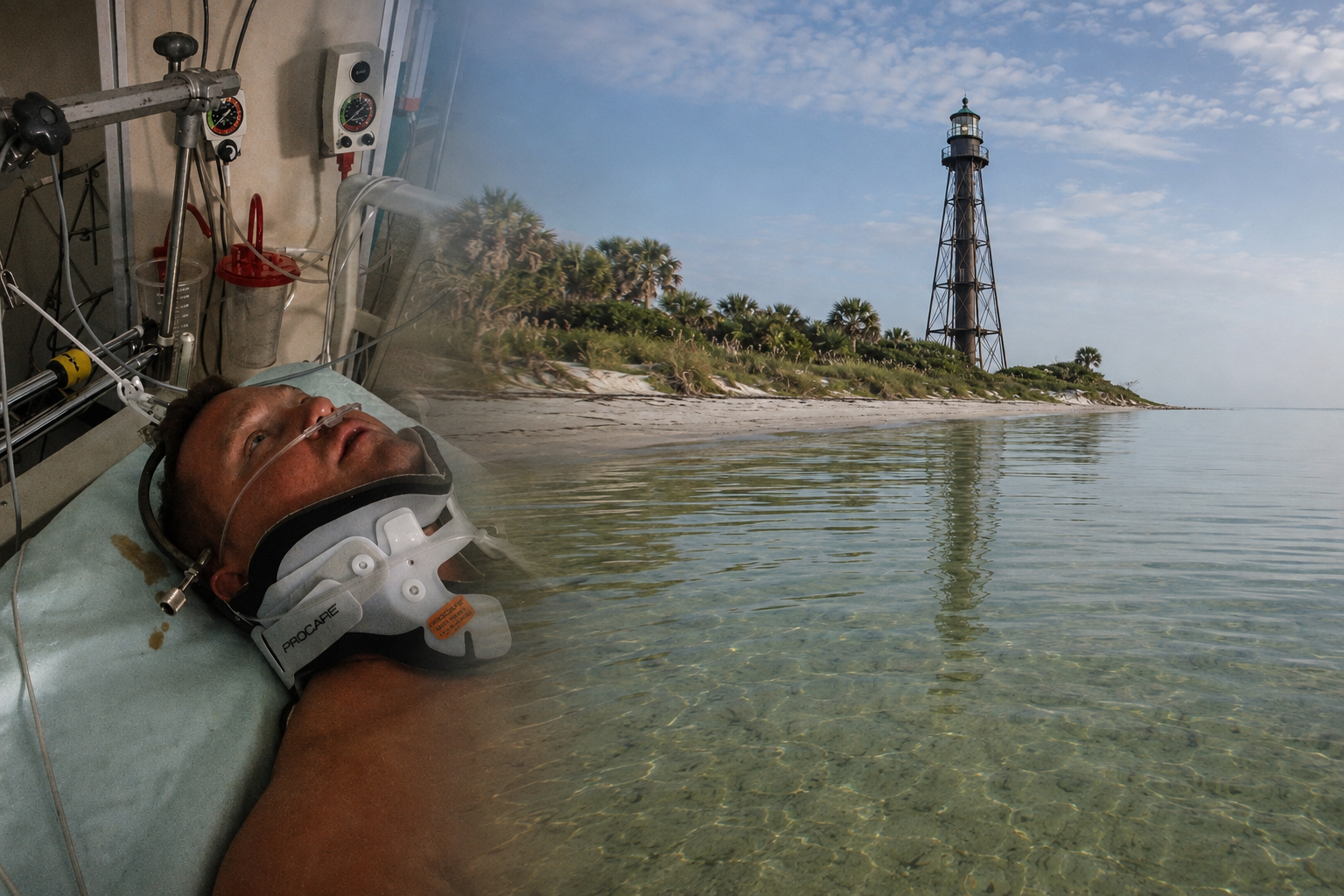
Twelve years ago today, on August 23, 2014, I broke my neck. I had no idea what life after quadriplegia was going to look like.
One of the clearest things I remember from that day is the water. It was incredibly clear, and I remember looking at it and thinking that if I was going to die, at least I was looking at something beautiful.
That is a strange thing to remember about the moment your entire life changes, but memory works that way. Sometimes it holds onto the smallest detail while everything else becomes noise.
I survived that day.
What I did not know was what survival was going to require. I had been a football player, a powerlifter, and a strongman athlete. I was used to solving problems physically. I was used to working hard, moving weight, pushing through discomfort, and relying heavily on what my body could do.
Then suddenly almost none of that applied anymore.
I had no real picture of what my life was going to look like. I knew I wanted to go home. I knew I needed to find some way to work and provide for my family. Beyond that, I did not understand the mechanics of what life with quadriplegia would actually require. What I did know was that there had to be a way forward, and I was going to find it.
How QuadCapable Began
This week, Facebook reminded me that QuadCapable is now eleven years old.
That means I started building it within about a year of breaking my neck, only months after finally getting out of the hospital. At the time, I was not trying to present myself as someone who had figured everything out. I was still figuring out almost everything.
I simply wanted a place to document what was happening, share what I was learning, and maybe make it easier for somebody else who found themselves asking the same questions.
The name itself came together in a way that still makes me laugh. I originally liked the idea of “Handy Capable,” playing off the word handicapped, but the name and domain were already taken. So I started thinking more specifically about my own situation.
I was a quadriplegic.
QuadCapable.
The domain was available. The social media handles were available. I could build around it, so I did.
I created the logos, claimed the social channels, secured the domain, and began treating it like a brand almost immediately. That was probably the business-school side of me colliding with the creator side of me.
But underneath all of that, QuadCapable had a very simple purpose. It was supposed to reflect my life: the good parts, the bad parts, the failures, the solutions, the technology, the travel, the caregiving, the frustration, and all the things nobody really explains to you when you leave the hospital and start trying to live again.
That last part became more important than I expected.
When I was inpatient, VA spinal cord injury care gave me a tremendous amount of information and support. But once you get back into the world, there are thousands of things nobody can completely teach you in a hospital room. You have to learn how to travel, how to find and train caregivers, how to make a hotel room work, how to build backup plans, how to make the right equipment fit your life, and how to put the pieces together so that the life you want is actually possible.
What Independence Looks Like in Life After Quadriplegia
The hardest part of the last twelve years has probably been building those systems through trial and error. People often see the finished version. They see me traveling, working, gaming, going to events, speaking, or simply showing up somewhere with everything apparently working. What they do not see is everything behind it.
Every caregiver has to be trained. Every trip has to be planned differently. Every piece of equipment has a purpose. Every routine exists because somebody had to figure out what worked and what did not.
What looks like independence from the outside is often the result of an enormous amount of preparation behind the scenes. That has changed how I define independence.
To me, independence is not doing everything yourself. It is having the freedom to choose.
Before my injury, I had that freedom and rarely thought about it. I could make a choice and act on it. Now the same choices often require more people, more planning, more equipment, and more coordination, but the underlying idea has not changed. Freedom is still having options. My job is to build enough systems around me that those options remain available.
The Village Behind the Life
That is where the village comes in.
My parents drove through the night to get to the hospital after my injury, and then they stayed. For six straight months, they were there every day, away from their home and normal lives, while I tried to survive and figure out what came next.
That was probably my earliest proof that I was not going to do this alone.
Related reading: The Village: What a Breakfast Taco Taught Me About Caregiving
Over the years, the village grew, and my understanding of what it meant grew with it. I used to think success was mostly about what I could personally accomplish. Now I understand that almost everything meaningful in life is built with other people.
I think that has made me more compassionate and more empathetic. I understand more clearly now what people carry for one another and how much of life depends on the willingness to show up. That is one of the biggest ways I have changed.
The mentality underneath it all, though, is pretty much the same. I have always been optimistic, stubborn, and willing to look for another angle when the obvious answer did not work. I have always believed that if there is a way, I can probably find it. That part of me survived the injury completely intact. What changed was my understanding that finding the way does not always mean finding it alone.
Some of the things I loved before my injury eventually found their way back into my life from a completely different direction. I may never again be the athlete moving the weight, but I later coached a powerlifting team for the Paralyzed Veterans of America Central Florida chapter.
That experience taught me something I have carried into almost everything since: losing the ability to participate in something one way does not necessarily mean losing that part of yourself.
Sometimes your role changes. Sometimes your perspective changes. Sometimes you simply have to learn how to come at the same thing from another direction.
That is probably one of the biggest differences between me twelve years ago and me today. I am better now at visualizing how something can work because I have twelve years of experience solving these problems.
I know what it takes to travel, what kind of hotel room I need, what transportation works, what caregiving support has to be in place, and which technologies actually create independence. That knowledge was built one mistake, one solution, and one lesson at a time. And almost from the beginning, I have tried to share those lessons while I was still learning them myself.
There was never really a clean point where I stopped rebuilding my own life and started helping other people rebuild theirs. Those things happened together. If I learned something useful, I wanted somebody else to benefit from it. That remains the accomplishment I am most proud of.
If something I have learned has helped another person with paralysis get through a difficult moment, helped a family understand what life after spinal cord injury can look like, or helped somebody find a tool or idea that made their life easier, then that matters to me more than almost anything else. If I have helped one person in the last twelve years, then this has all been worth sharing. And I know it has been more than one.
Still Showing Up
Today, this twelve-year anniversary happens to arrive at another moment that puts everything into perspective. I am about to meet my fifth grandchild.
Her name is Charlotte.
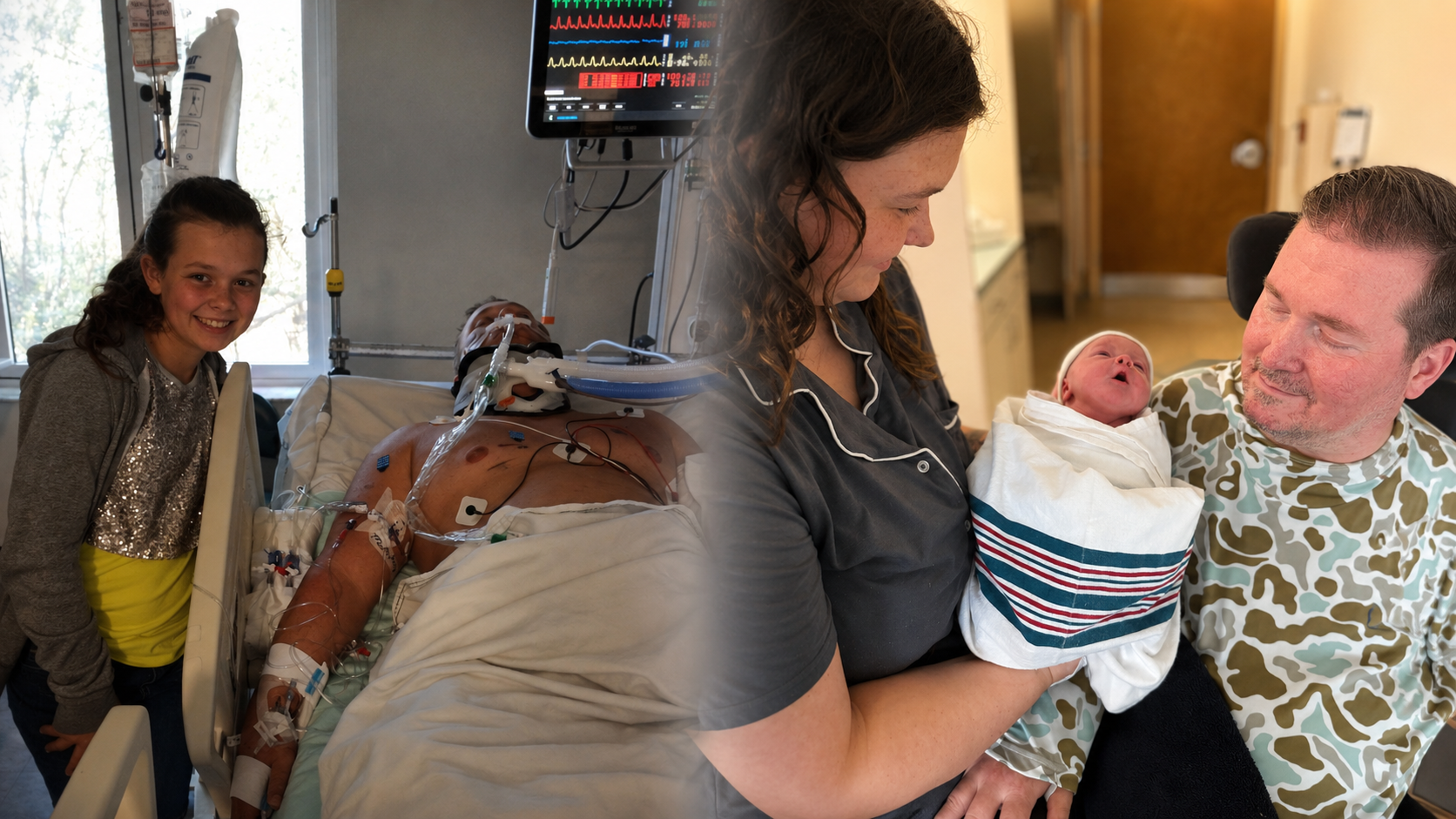
She will carry my name, and of course there is pride and legacy in that. But what means the most to me is much simpler: I am here to see it.
I have been able to watch my family grow. I have been able to stay part of their lives. I have always believed that showing up matters, and through everything that has happened over these twelve years, I have been given the chance to keep showing up for the people I love.
That means more to me than almost anything.
Twelve years ago, I had no idea whether I was going to survive, much less what the rest of my life would become. Today, I am preparing to welcome another generation of my family. That is a hell of a distance to travel in twelve years. If I could sit beside the version of myself lying in that hospital and tell him only one thing, it would probably be surprisingly simple:
Don’t worry. It’s going to be great.
Not easy. Not painless. Not without loss. But great. Because a great life is not the same thing as an easy life. I would never pretend paralysis has been some hidden gift. There are things I lost on August 23, 2014, that I would take back in a second. But losing those things did not take away my ability to think, create, contribute, love, build, learn, or show up for the people around me. It changed how I do those things.
That difference became the heart of QuadCapable.
Whenever I find a way to make something work, I want to document it because somebody else may be sitting where I once sat, trying to imagine a future they cannot yet see.
Sometimes seeing one person find a way is enough to make you start looking for your own.
QuadCapable has never been about pretending life with quadriplegia is easy. It is about showing that capability can look very different from what people expect, and that independence can come from the right combination of technology, preparation, people, experience, and stubborn optimism.
If your life has changed in a way you never expected, you do not have to figure out the next twelve years today. I certainly did not. You just have to figure out what comes next, learn from it, and keep moving. Build your village, use every tool available to you, and keep your options open enough that you can continue showing up.
Twelve years of solving one problem at a time can become a life you could not have imagined at the beginning. And for me, this anniversary is not only about looking backward.
I am still building.
I want QuadCapable to grow beyond documenting my own life. I want the lessons I have learned through twelve years of trial and error to reach more people, create better resources, and help others find their own way forward. That is the next chapter for me. Not simply doing more, but making what I have learned useful on a larger scale.
That is the legacy I care about building.
Twelve years ago today, I looked through crystal-clear water and wondered whether I was about to die. Twelve years into life after quadriplegia, I am still learning, still building, and still finding better ways to make the life I want possible. And very soon, I get to show up for another Charlie.
“The goal was never just to survive quadriplegia. The goal was to build a life big enough that the wheelchair eventually became one detail in a much larger story.”
— Charlie Merritt / QuadCapable
Adapt. Overcome. Thrive.
So Easy a Quadriplegic Can Do It
Most of what I do works because I have learned to build the right systems around it. I train caregivers, use the right equipment, plan ahead, and rely on assistive technology to replace some of the physical ability I lost. Travel, work, gaming, family life, advocacy, and everything else usually come down to the same question:
What has to be in place for me to be able to do this?
Sometimes the answer is technology. Sometimes it is another person. Sometimes it is better planning. Usually, it is some combination of all three.
Charlie’s Challenge
Think of one thing in your life that you have already decided is too difficult or not possible.
Now ask yourself a different question:
What would have to change for this to become possible for me?
Maybe you need a better tool, more information, another person, or a completely different approach. Pick one barrier and work on that first. You do not have to solve the next twelve years. You just have to solve the next problem.