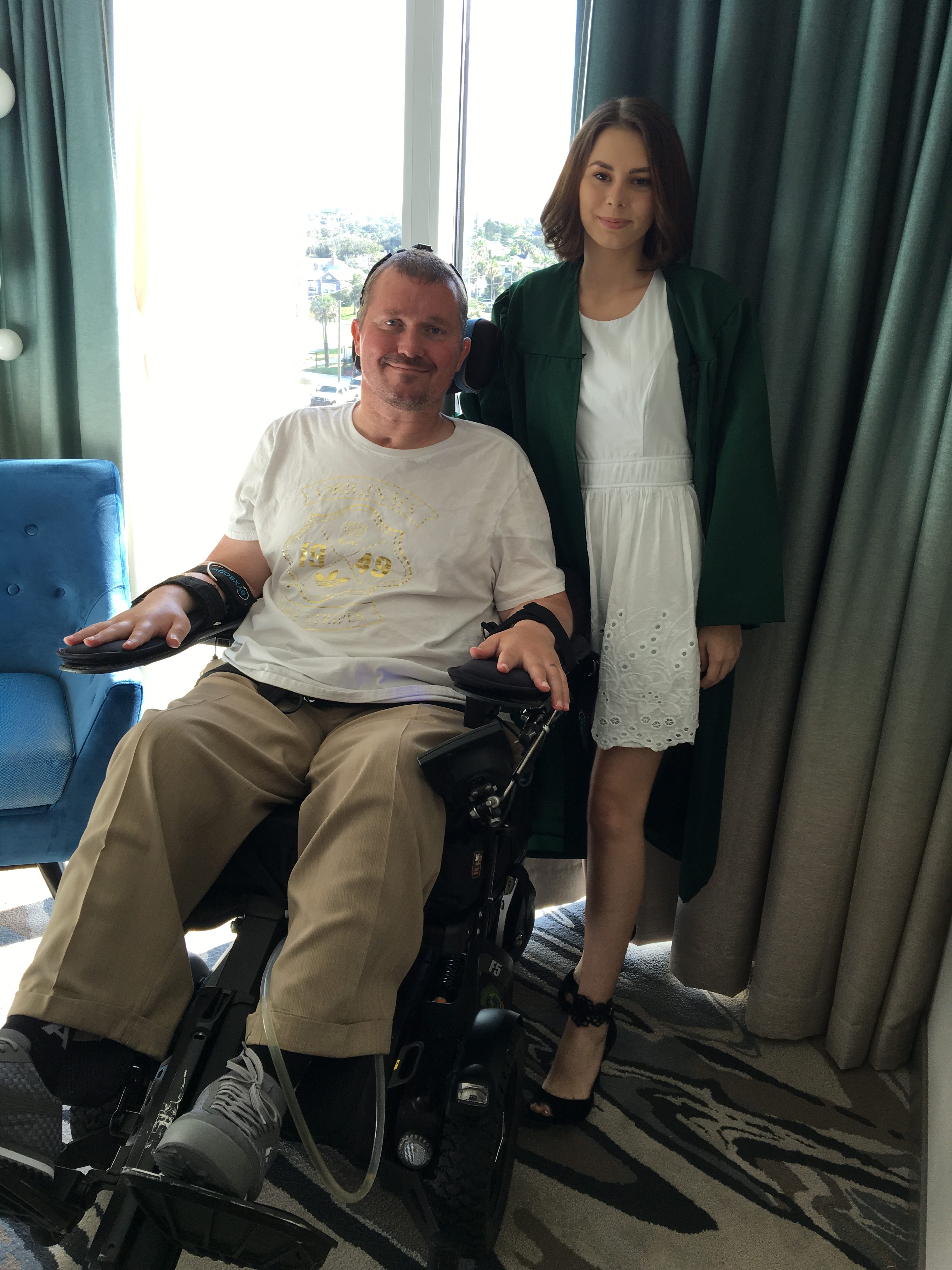
rnJoy and jitters often go hand in hand for people who find out they will soon become parents through birth or adoption. After all, parenting is a costly commitment that lasts a lifetime. Parenthood for people with disabilities, the apprehension may be amplified when they consider the unique child care challenges they could face.rnrnBut there are tools and techniques to help parents get the best of those barriers, and plenty of support from experts and other parents who’ve grappled with — and overcome — some of the same obstacles. If you are dealing with a disability while preparing for parenthood, here are a few things to consider as well as suggestions for support.rnrnQuadcapable with his daughterrnrnMaking ModificationsrnrnYou may have already made some modifications to your home to make it a better fit for your needs. Still, parents-to-be need to take a fresh look at their surroundings while keeping the new challenges of childcare in mind.rnrnFor instance, if you have mobility issues, you might eventually consider having a backyard fence installed to help keep kids safe while they are playing outdoors until you can reach them. More immediately, installing grab bars in bathrooms could make bathing a baby more manageable if you have balance and mobility issues, according to HomeAdvisor. And opting for non-slip flooring in baths, kitchens, and other areas where wet floors could present a hazard, especially while carrying a squirmy baby or toddler, might be an essential investment that will also benefit babies as they learn to crawl and walk.rnrnChildproofing ChallengesrnrnAnd, as babies get more mobile, it could be necessary for parents who use wheelchairs to take special precautions to keep kids safe. For instance, you may have hazardous items stored in lower cabinets to make them easily accessible for you. That means you’ll need to be especially vigilant about storing them in childproof cabinets or containers once curious babies start crawling. And wheelchair-accessible stoves, drawers, and countertops may also mean easier access to common kitchen hazards for inquisitive toddlers. So it makes sense to start researching, trying out, and installing safety gear well before babies discover stove knobs, knives, and common cleansers that they might want to taste test.rnrnSources of SupportrnrnAlthough these considerations may seem daunting at first, there are a number of resources available to help prospective parents with disabilities address any unique obstacles they might face. Your healthcare team may be able to offer advice or refer you to specialists who can teach you adapted techniques to tackle common childcare chores in a way that will be safe and effective for both you and your little one. Some programs may even offer home visits to help parents-to-be assess spaces and equipment with childcare safety and simplicity in mind. These experts may make recommendations for assistive technology and adaptive equipment, such as wheelchair-accessible cribs or specially designed strollers and baby carriers, to help with common tasks.rnrnrnrnMaking modifications and investing in adapted equipment can be expensive, though. Fortunately, many government agencies and nonprofits offer assistance in the form of grants, equipment loans, and more. The U.S. Department of Health and Human Services might be a good place to start when researching resources. Similarly, local and national nonprofits such as Through the Looking Glass may provide consultations for parents with disabilities to make them aware of services available in their area. And innovative parents have also figured out ways to safely modify standard baby gear to suit their needs, with many offering their ideas online.rnrnSo, with some research and reaching out, you can be better prepared for parenthood, regardless of your disability. Indeed, adequate planning will help you feel confident and comfortable enough to let those feelings of joy push pre-parenting jitters to the background.rnrnAshley Taylor rnrnashley@disabledparents.orgrnrndisabledparents.orgrnrn
n I’ve spent a lot of time over the past twelve years thinking about what it means to be a burden. nnnn It’s not a conversation people like to have, especially in the disability community. Most of us have heard the same reassuring words from the people who love us: “You’re not a burden.” My […]
n As a quadriplegic, independence means everything. These tools make daily tasks easier, safer, and more empowering. Below are 10 highly-rated Amazon items! nn nnnn nn 1. RMS Deluxe Sock Aid n Summary: Foam-handled sock aid makes dressing effortless for limited mobility users. Ideal for putting on regular socks without bending. n Rating: ★★★★½ | […]
 rnrnMaking modifications and investing in adapted equipment can be expensive, though. Fortunately, many government agencies and nonprofits offer assistance in the form of grants, equipment loans, and more. The U.S. Department of Health and Human Services might be a good place to start when researching resources. Similarly, local and national nonprofits such as Through the Looking Glass may provide consultations for parents with disabilities to make them aware of services available in their area. And innovative parents have also figured out ways to safely modify standard baby gear to suit their needs, with many offering their ideas online.rnrnSo, with some research and reaching out, you can be better prepared for parenthood, regardless of your disability. Indeed, adequate planning will help you feel confident and comfortable enough to let those feelings of joy push pre-parenting jitters to the background.rnrnAshley Taylor rnrnashley@disabledparents.orgrnrndisabledparents.orgrnrn